A metabolic enzyme is located exclusively inside the cytoplasm of living cells. When this enzyme comes into direct contact with a colourless water-soluble substrate, it catalyses a reaction that produces a blue product.
Assume that neither the enzyme nor the substrate can cross an intact cell surface membrane.
Four separate suspensions were prepared by adding the substrate to: - mammalian cells in an isotonic solution - mammalian cells in pure water - intact plant cells in pure water - plant protoplasts (plant cells from which cell walls have been enzymatically removed) in pure water
All four mixtures were incubated at 25∘C for 10 minutes.
Which row in the table correctly predicts whether a blue colour will develop in each mixture?
| | mammalian cells in isotonic solution | mammalian cells in pure water | intact plant cells in pure water | plant protoplasts in pure water | | :--- | :--- | :--- | :--- | :--- | | A | blue colour develops | no colour change | no colour change | blue colour develops | | B | blue colour develops | blue colour develops | no colour change | no colour change | | C | no colour change | blue colour develops | no colour change | blue colour develops | | D | no colour change | blue colour develops | blue colour develops | no colour change | | E | no colour change | no colour change | blue colour develops | blue colour develops | | F | no colour change | blue colour develops | no colour change | no colour change | | G | blue colour develops | no colour change | blue colour develops | no colour change | | H | no colour change | no colour change | no colour change | blue colour develops |
A.
mammalian cells in isotonic solution: blue colour develops; mammalian cells in pure water: no colour change; intact plant cells in pure water: no colour change; plant protoplasts in pure water: blue colour develops
B.
mammalian cells in isotonic solution: blue colour develops; mammalian cells in pure water: blue colour develops; intact plant cells in pure water: no colour change; plant protoplasts in pure water: no colour change
C.
mammalian cells in isotonic solution: no colour change; mammalian cells in pure water: blue colour develops; intact plant cells in pure water: no colour change; plant protoplasts in pure water: blue colour develops
D.
mammalian cells in isotonic solution: no colour change; mammalian cells in pure water: blue colour develops; intact plant cells in pure water: blue colour develops; plant protoplasts in pure water: no colour change
E.
mammalian cells in isotonic solution: no colour change; mammalian cells in pure water: no colour change; intact plant cells in pure water: blue colour develops; plant protoplasts in pure water: blue colour develops
F.
mammalian cells in isotonic solution: no colour change; mammalian cells in pure water: blue colour develops; intact plant cells in pure water: no colour change; plant protoplasts in pure water: no colour change
G.
mammalian cells in isotonic solution: blue colour develops; mammalian cells in pure water: no colour change; intact plant cells in pure water: blue colour develops; plant protoplasts in pure water: no colour change
H.
mammalian cells in isotonic solution: no colour change; mammalian cells in pure water: no colour change; intact plant cells in pure water: no colour change; plant protoplasts in pure water: blue colour develops
Answer and solution
Answer: C
Because neither the enzyme nor the substrate can cross an intact cell surface membrane, the enzyme can only catalyse the reaction if the cell lyses (bursts), releasing the enzyme into the extracellular solution containing the substrate.
1. Mammalian cells in isotonic solution: There is no net movement of water into or out of the cells by osmosis. The plasma membranes remain intact, so the enzyme and substrate remain separated →no colour change.
2. Mammalian cells in pure water: Pure water has a higher water potential than the cell cytoplasm. Water enters the cells by osmosis down the water potential gradient. Lacking a rigid cell wall, the mammalian cells swell and undergo osmotic lysis (burst). The enzyme is released into the medium and reacts with the substrate →blue colour develops.
3. Intact plant cells in pure water: Water enters the cells by osmosis, causing the protoplast to swell and exert turgor pressure against the rigid cellulose cell wall. The wall prevents the cell from bursting, keeping the cell surface membrane intact →no colour change.
4. Plant protoplasts in pure water: Because the cell walls have been removed, protoplasts behave osmotically like animal cells. Water enters by osmosis, causing the protoplasts to swell and burst (lyse). The released enzyme reacts with the substrate →blue colour develops.
Therefore, row C is correct.
▸Question 2
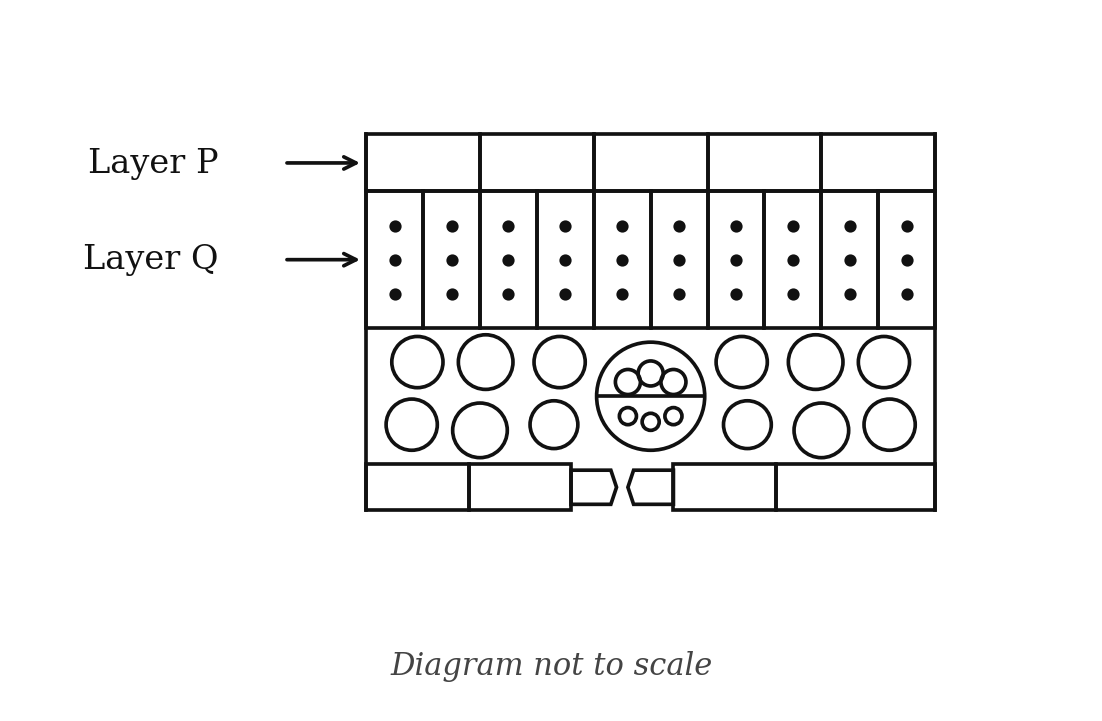
The diagram shows a simplified transverse section through a dicotyledonous plant leaf, highlighting two distinct cellular layers, P and Q.
Which of the following statements is/are correct?
1 Layer P and Layer Q are both tissues.
2 The leaf is classified as an organ system.
3 Mitochondria are present in the cytoplasm of cells in both Layer P and Layer Q.
A.
none of them
B.
1 only
C.
2 only
D.
3 only
E.
1 and 2 only
F.
1 and 3 only
G.
2 and 3 only
H.
1, 2 and 3
Answer and solution
Answer: F
Statement 1 is correct: Layer P (upper epidermis) and Layer Q (palisade mesophyll) are each composed of specialized cells working together to perform specific functions (protection/secretion of the cuticle and photosynthesis, respectively), which defines a tissue.
Statement 2 is incorrect: A leaf is an organ, consisting of several different tissues (epidermis, mesophyll, vascular tissue) functioning together. The shoot system or root system represents an organ system in plants.
Statement 3 is correct: Both epidermal cells (Layer P) and palisade mesophyll cells (Layer Q) are living eukaryotic plant cells that carry out aerobic cellular respiration to generate ATP, and therefore both contain mitochondria in their cytoplasm.
Hence, only statements 1 and 3 are correct.
▸Question 3
Which of the statements about the production of an insect-resistant transgenic crop plant are correct?
1 A restriction enzyme is used to cut the desired gene from the donor organism's DNA.
2 DNA ligase is used to seal the gene into a plasmid vector.
3 The genetically modified plant cells divide by meiosis during micropropagation to form new plantlets.
4 All somatic cells in the mature regenerated plant will contain a copy of the inserted gene.
A.
1 and 2 only
B.
1 and 4 only
C.
2 and 3 only
D.
3 and 4 only
E.
1, 2 and 4 only
F.
1, 3 and 4 only
G.
2, 3 and 4 only
H.
1, 2, 3 and 4
Answer and solution
Answer: E
Statement 1 is correct: restriction enzymes (endonucleases) recognise specific palindromic sequences and cut DNA, allowing the desired gene to be isolated.
Statement 2 is correct: DNA ligase catalyses the formation of phosphodiester bonds to join the sugar-phosphate backbones of the gene and the plasmid vector together.
Statement 3 is incorrect: micropropagation (plant tissue culture) relies entirely on mitotic cell division to proliferate transformed cells and regenerate plantlets. Meiosis only occurs during gametogenesis in sexual reproduction.
Statement 4 is correct: because the mature plant is regenerated through successive rounds of mitosis originating from a single genetically modified cell, every somatic cell carries the inserted gene.
Therefore, statements 1, 2, and 4 only are correct.
▸Question 4
The graph shows the relative mass of DNA per nucleus during meiosis and gamete formation in a diploid animal.
Four time points are labelled t1 , t2 , t3 , and t4 .
Which of the following statements is/are correct?
1 Semi-conservative replication of DNA occurs during the period containing time t1 .
2 At time t3 , the nucleus contains pairs of homologous chromosomes.
3 The number of chromosomes in a nucleus at time t4 is equal to the number of chromosomes in a nucleus at time t3 .
A.
none of them
B.
1 only
C.
2 only
D.
3 only
E.
1 and 2 only
F.
1 and 3 only
G.
2 and 3 only
H.
1, 2 and 3
Answer and solution
Answer: F
Statement 1 is correct: Between t=1 and t=3 , the mass of DNA per nucleus doubles from 2 to 4 arbitrary units during the S phase of interphase via semi-conservative DNA replication.
Statement 2 is incorrect: Homologous pairs of chromosomes are separated into different daughter nuclei during the first meiotic division (between t2 and t3 ). Therefore, at time t3 (during meiosis II), each nucleus is haploid and contains only one chromosome of each homologous pair (no homologous pairs remain).
Statement 3 is correct: If the diploid number of chromosomes is 2n , then at time t3 (meiosis II), each nucleus contains n chromosomes (each consisting of two sister chromatids). In the second meiotic division, sister chromatids separate, so at time t4 , each nucleus still contains n chromosomes (each consisting of a single chromatid). Thus, the number of chromosomes is equal in both nuclei ( n=n ), even though the mass of DNA has halved from 2 to 1 .
Therefore, only statements 1 and 3 are correct.
▸Question 5
β -thalassaemia is an inherited condition in humans caused by a mutation in the gene coding for the β -globin polypeptide of haemoglobin, leading to a deficiency of functional haemoglobin.
In one form of gene therapy, haematopoietic stem cells are removed from the bone marrow of a patient with β -thalassaemia. A functional β -globin gene is inserted into the nuclear DNA of these stem cells. The genetically modified stem cells are then returned to the patient, where they establish in the bone marrow and can differentiate into red blood cells.
Which of the following statements is/are correct?
1 The modified stem cells can divide by mitosis to produce replacement stem cells that also contain the inserted gene.
2 Mature red blood cells circulating in the patient's blood will each contain a nucleus carrying the inserted gene.
3 In developing red blood cells, mRNA transcribed from the inserted gene is translated into functional β -globin polypeptides.
A.
1 only
B.
2 only
C.
3 only
D.
1 and 2 only
E.
1 and 3 only
F.
2 and 3 only
G.
1, 2 and 3
Answer and solution
Answer: E
Statement 1 is correct: Stem cells in the bone marrow have the ability to self-renew. When they divide by mitosis, DNA replication ensures that the daughter stem cells inherit an identical copy of the nuclear DNA, including the inserted β -globin gene.
Statement 2 is incorrect: During mammalian erythropoiesis, developing red blood cells synthesise haemoglobin and then lose their nucleus and other organelles before entering the bloodstream as mature erythrocytes. Therefore, mature red blood cells in the circulation do not possess a nucleus.
Statement 3 is correct: Prior to enucleation, developing red blood cells (erythroblasts) express the inserted gene: it is transcribed into mRNA in the nucleus, and the mRNA is translated on ribosomes in the cytoplasm into functional β -globin polypeptides.
Therefore, statements 1 and 3 only are correct.
▸Question 6
The diagram represents the secondary structure of a transfer RNA (tRNA) molecule.
Which row in the table correctly identifies parts 1, 2, and 3, and describes the overall molecular nature of tRNA?
| | Part 1 | Type of bond at 2 | Part 3 | Overall structure | | :--- | :--- | :--- | :--- | :--- | | A | amino acid attachment site | phosphodiester | anticodon | single-stranded RNA | | B | amino acid attachment site | hydrogen | codon | single-stranded RNA | | C | amino acid attachment site | hydrogen | anticodon | double-stranded RNA | | D | amino acid attachment site | hydrogen | anticodon | single-stranded RNA | | E | ribosome attachment site | phosphodiester | codon | double-stranded RNA | | F | ribosome attachment site | hydrogen | anticodon | single-stranded RNA | | G | mRNA attachment site | hydrogen | codon | single-stranded RNA | | H | mRNA attachment site | phosphodiester | anticodon | double-stranded RNA |
Part 1: amino acid attachment site, Type of bond at 2: phosphodiester, Part 3: anticodon, Overall structure: single-stranded RNA
B.
Part 1: amino acid attachment site, Type of bond at 2: hydrogen, Part 3: codon, Overall structure: single-stranded RNA
C.
Part 1: amino acid attachment site, Type of bond at 2: hydrogen, Part 3: anticodon, Overall structure: double-stranded RNA
D.
Part 1: amino acid attachment site, Type of bond at 2: hydrogen, Part 3: anticodon, Overall structure: single-stranded RNA
E.
Part 1: ribosome attachment site, Type of bond at 2: phosphodiester, Part 3: codon, Overall structure: double-stranded RNA
F.
Part 1: ribosome attachment site, Type of bond at 2: hydrogen, Part 3: anticodon, Overall structure: single-stranded RNA
G.
Part 1: mRNA attachment site, Type of bond at 2: hydrogen, Part 3: codon, Overall structure: single-stranded RNA
H.
Part 1: mRNA attachment site, Type of bond at 2: phosphodiester, Part 3: anticodon, Overall structure: double-stranded RNA
Answer and solution
Answer: D
1. Part 1 points to the 3' single-stranded terminal end of the tRNA molecule, which is the specific amino acid attachment site. 2. Part 2 points to the short base-paired stem regions where complementary bases are held together by hydrogen bonds. 3. Part 3 points to the triplet of exposed unpaired bases at the bottom loop, which forms the anticodon that pairs with a complementary codon on mRNA. 4. tRNA is synthesized as a single polynucleotide chain that folds back upon itself through internal complementary base pairing; therefore, it is classified as a single-stranded RNA molecule.
Thus, row D is correct.
▸Question 7
The diagram shows the blood flow between four major mammalian organ systems, represented by boxes W, X, Y, and Z. Arrows indicate the direction of blood flow in the vessels connecting them.
Which row in the table correctly identifies boxes W, X, Y, and Z?
| | Heart and lungs | Kidneys | Liver | Small intestine | | :--- | :---: | :---: | :---: | :---: | | A | X | Z | Y | W | | B | Y | W | X | Z | | C | Y | Z | W | X | | D | Y | Z | X | W | | E | Z | W | Y | X | | F | Z | X | W | Y | | G | X | W | Z | Y | | H | Y | X | Z | W |
Heart and lungs: X, Kidneys: Z, Liver: Y, Small intestine: W
B.
Heart and lungs: Y, Kidneys: W, Liver: X, Small intestine: Z
C.
Heart and lungs: Y, Kidneys: Z, Liver: W, Small intestine: X
D.
Heart and lungs: Y, Kidneys: Z, Liver: X, Small intestine: W
E.
Heart and lungs: Z, Kidneys: W, Liver: Y, Small intestine: X
F.
Heart and lungs: Z, Kidneys: X, Liver: W, Small intestine: Y
G.
Heart and lungs: X, Kidneys: W, Liver: Z, Small intestine: Y
H.
Heart and lungs: Y, Kidneys: X, Liver: Z, Small intestine: W
Answer and solution
Answer: D
1. Identify the central pump/distributor (Y): Box Y pumps blood to three different organs (W, X, and Z) and receives venous return directly from X and Z. In mammalian systemic and pulmonary circulation, this central distributor is the heart and lungs.
2. Identify the hepatic portal system (W and X): In mammals, deoxygenated blood leaving the digestive tract does not return immediately to the heart; instead, it travels via the hepatic portal vein directly to the liver. - Box W receives arterial blood from Y and sends all of its venous outflow directly to box X. Therefore, W is the small intestine. - Box X receives dual blood supplies: oxygenated blood from Y (via the hepatic artery) and nutrient-rich blood from W (via the hepatic portal vein), and returns blood to Y (via the hepatic vein). Therefore, X is the liver.
3. Identify the kidneys (Z): Box Z receives blood from Y (via the renal artery) and returns blood directly to Y (via the renal vein) without passing through another capillary bed. Therefore, Z represents the kidneys.
Matching the boxes: - Heart and lungs: Y - Kidneys: Z - Liver: X - Small intestine: W
Thus, row D is correct.
▸Question 8
An investigation was carried out using a single clone of the water flea *Daphnia magna* (all individuals were genetically identical).
Forty newly hatched *Daphnia* of identical size were divided equally into four separate aquaria (Groups 1 to 4). The environmental conditions in the aquaria were controlled as follows: - kept at the same constant water temperature - supplied with the same daily quantity of algal food - kept under the same light–dark cycle - exposed to a different concentration of chemical cues (kairomones) released by predatory fish, where the concentration in Group 1 < Group 2 < Group 3 < Group 4
After reaching maturity, the relative length of the defensive tail spine was measured for each individual, and the mean relative spine length was calculated for each group. The results are shown in the graph below.
Which of the following statements could explain the results?
1 The difference in mean spine length between Group 1 and Group 2 is due to an environmental factor.
2 The mean spine length in Group 4 equals that in Group 3 because an environmental factor other than predator cue concentration is limiting growth.
3 The mean spine length in Group 4 equals that in Group 3 because the maximum spine length is constrained by the genotype of the clone.
A.
none of them
B.
1 only
C.
2 only
D.
3 only
E.
1 and 2 only
F.
1 and 3 only
G.
2 and 3 only
H.
1, 2 and 3
Answer and solution
Answer: H
All three statements are valid biological explanations of the data:
- Statement 1 is correct: All individuals are clones and share the identical genotype. Because other environmental factors (food, temperature, light) were kept identical, the difference in spine length between Group 1 and Group 2 is caused by the differing environmental factor (predator cue concentration). - Statement 2 is correct: A plateau at higher cue concentrations could occur if another environmental factor held constant (such as available nutrients or food intake) becomes a limiting factor, restricting further spine elongation despite stronger chemical stimulation. - Statement 3 is correct: A plateau can also be explained by genetic constraints. The genome of the organism determines the maximum possible physiological and developmental expression (the upper limit of the norm of reaction) for tail spine length.
▸Question 9
Red-green colour blindness is a sex-linked (X-linked) recessive condition in humans.
A survey of a group of 1000 students recorded the following data:
| Group | Phenotype / status | Number of individuals | | :--- | :--- | :--- | | Males | Colour-blind | 48 | | Males | Normal vision | 552 | | Females | Colour-blind | 4 | | Females | Carrier with normal vision | 72 | | Females | Non-carrier with normal vision | 324 |
One nucleated white blood cell was collected from every individual in the group.
What is the total number of red-green colour blindness alleles present across all of these collected cells?
A.
56
B.
124
C.
128
D.
176
E.
200
F.
248
Answer and solution
Answer: C
Red-green colour blindness is an X-linked recessive condition. Let Xb represent the allele for colour blindness and XB represent the normal dominant allele.
1. Males (XY): Males have only one X chromosome per diploid cell. - Colour-blind males have the genotype XbY . Each nucleated cell has 1 copy of the Xb allele. - Contribution: 48×1=48 . - Normal males ( XBY ) have 0 copies of the Xb allele.
2. Females (XX): Females have two X chromosomes per diploid cell. - Colour-blind females have the homozygous genotype XbXb . Each nucleated cell has 2 copies of the Xb allele. - Contribution: 4×2=8 . - Carrier females have the heterozygous genotype XBXb . Each nucleated cell has 1 copy of the Xb allele. - Contribution: 72×1=72 . - Non-carrier females ( XBXB ) have 0 copies of the Xb allele. Total number of Xb alleles=48+8+72=128
▸Question 10
An investigation was carried out into the effect of temperature on anaerobic respiration in yeast.
A suspension of yeast cells was supplied with excess glucose solution and incubated at four different temperatures: 15∘C , 25∘C , 35∘C , and 45∘C . In each case, the cumulative volume of carbon dioxide released was recorded at regular intervals over a period of 30 minutes .
All other variables were kept constant. The results are shown on the graph below.
Which of the following statements is/are correct?
1 During the first 10 minutes , the average rate of carbon dioxide production was greatest at 45∘C .
2 For the reaction at 35∘C , the average rate of carbon dioxide production was 0.01 cm3 s−1 .
3 Between t=15 minutes and t=30 minutes , the rate of carbon dioxide production at 45∘C was greater than at 15∘C .
A.
none of them
B.
1 only
C.
2 only
D.
3 only
E.
1 and 2 only
F.
1 and 3 only
G.
2 and 3 only
H.
1, 2 and 3
Answer and solution
Answer: E
Let us evaluate each statement:
1. Correct. During the first 10 minutes ( t=0 to t=10 min ): - At 45∘C , volume produced = 8.0 cm3 , so average rate = 10 min8.0 cm3=0.80 cm3 min−1 . - At 35∘C , volume produced = 6.0 cm3 , so average rate = 10 min6.0 cm3=0.60 cm3 min−1 . - At 25∘C , average rate = 10 min3.0 cm3=0.30 cm3 min−1 . - At 15∘C , average rate = 10 min1.0 cm3=0.10 cm3 min−1 . The rate was highest at 45∘C .
2. Correct. At 35∘C , total volume of \ceCO2 produced in 30 minutes is 18.0 cm3 . 30 minutes=30×60 s=1800 s . Average rate = 1800 s18.0 cm3=0.010 cm3 s−1 .
3. Incorrect. Between t=15 min and t=30 min : - At 45∘C , the volume remains constant at 8.0 cm3 (the curve has plateaued due to thermal denaturation of enzymes), so the rate is 0 cm3 min−1 . - At 15∘C , the volume increases linearly from 1.5 cm3 to 3.0 cm3 , giving a rate of 15 min1.5 cm3=0.10 cm3 min−1 . Therefore, the rate at 45∘C is less than at 15∘C .
Thus, only statements 1 and 2 are correct (option E).
▸Question 11
Identical cylinders of potato tissue were prepared and divided into two batches:
- Batch P consisted of untreated, living tissue. - Batch Q was placed in boiling water for 10 minutes to kill the cells and then cooled to room temperature.
Both batches were immersed in sucrose solutions of concentrations ranging from 0.0 mol dm−3 to 0.8 mol dm−3 at 20∘C for 2 hours. The percentage change in mass was measured, and the results are shown in the graph below.
Which of the following statements is/are correct?
1 At a sucrose concentration of 0.30 mol dm−3 , the water potential of the tissue in Batch P is equal to the water potential of the surrounding solution.
2 In Batch P, the pressure potential ( Ψp ) of the cells immersed in the 0.80 mol dm−3 sucrose solution is zero.
3 The lack of mass change in Batch Q is due to the breakdown of cellulose cell walls during boiling.
A.
none of them
B.
1 only
C.
2 only
D.
3 only
E.
1 and 2 only
F.
1 and 3 only
G.
2 and 3 only
H.
1, 2 and 3
Answer and solution
Answer: E
Statement 1 is correct: At a sucrose concentration of 0.30 mol dm−3 , the percentage change in mass for Batch P is 0% . This means there is no net movement of water into or out of the cells by osmosis, indicating that the water potential of the tissue equals the water potential of the external sucrose solution ( Ψtissue=Ψsolution ).
Statement 2 is correct: In solutions with concentrations greater than 0.30 mol dm−3 , water leaves the living cells down the water potential gradient, causing plasmolysis. At 0.80 mol dm−3 , the cells have reached maximum mass loss and are fully plasmolysed. Because the protoplast has pulled away from the cell wall, the wall exerts no inward force on the protoplast, meaning the pressure potential (turgor pressure, Ψp ) is zero.
Statement 3 is incorrect: Boiling disrupts and denatures the selectively permeable cell membranes (plasma membrane and tonoplast), destroying their selective permeability. The cellulose cell walls are not destroyed by boiling. Without intact selectively permeable membranes, solutes and water diffuse freely, so no osmotic gradient or net mass change can be maintained.
▸Question 12
A student investigated the rate of aerobic respiration in germinating pea seeds using a sealed respirometer containing potassium hydroxide solution to absorb \ceCO2 . The respirometer contained 50 g of germinating seeds and was maintained at a constant temperature of 20∘C .
The graph shows the cumulative volume of oxygen consumed over an 8-hour period.
Which row in the table gives the correct mean rate of oxygen consumption per gram of seeds between 0 and 4 hours , and the most likely reason why oxygen consumption stopped after 4 hours ?
| | Mean rate of oxygen consumption / cm3 g−1 h−1 | Reason for oxygen consumption stopping after 4 h | | --- | --- | --- | | A | 0.050 | available oxygen in the respirometer has been depleted | | B | 0.050 | respiratory enzymes have denatured | | C | 0.10 | available oxygen in the respirometer has been depleted | | D | 0.10 | all respiratory enzyme active sites are saturated | | E | 0.40 | available oxygen in the respirometer has been depleted | | F | 0.40 | respiratory enzymes have denatured | | G | 5.0 | available oxygen in the respirometer has been depleted | | H | 5.0 | all respiratory enzyme active sites are saturated |
0.050 | available oxygen in the respirometer has been depleted
B.
0.050 | respiratory enzymes have denatured
C.
0.10 | available oxygen in the respirometer has been depleted
D.
0.10 | all respiratory enzyme active sites are saturated
E.
0.40 | available oxygen in the respirometer has been depleted
F.
0.40 | respiratory enzymes have denatured
G.
5.0 | available oxygen in the respirometer has been depleted
H.
5.0 | all respiratory enzyme active sites are saturated
Answer and solution
Answer: C
To calculate the mean rate of oxygen consumption per gram of seeds between 0 and 4 hours :
1. From the graph, the cumulative volume of oxygen consumed at t=4 h is 20.0 cm3 , giving ΔV=20.0 cm3 in Δt=4 h . 2. The mass of the seeds is m=50 g . 3. The rate per unit mass is: Rate=m×ΔtΔV=50 g×4 h20.0 cm3=20020.0=0.10 cm3 g−1 h−1 Reason for stopping after 4 hours : Because the respirometer is a sealed chamber kept at a constant non-denaturing temperature ( 20∘C ), the cessation of oxygen uptake occurs because all available oxygen inside the sealed vessel has been consumed by aerobic respiration. Active site saturation would lead to a constant non-zero rate of oxygen uptake (a continuing linear increase in cumulative volume), not a plateau.
▸Question 13
Two stem cuttings taken from the same parent rose plant are grown in two different gardens.
Which of the following could lead to phenotypic variation between the two mature plants?
1 differences in the intensity of light received by the plants
2 crossing over during meiosis in the parent plant
3 spontaneous mutations occurring during mitotic cell divisions
A.
none of them
B.
1 only
C.
2 only
D.
3 only
E.
1 and 2 only
F.
1 and 3 only
G.
2 and 3 only
H.
1, 2 and 3
Answer and solution
Answer: F
Statement 1 is correct: Phenotypic variation can be caused by environmental factors. Differences in light intensity directly influence photosynthesis, growth rate, morphology, and flowering.
Statement 2 is incorrect: Taking cuttings is a method of vegetative propagation (asexual reproduction). The cuttings are formed entirely by mitotic division of somatic tissue from the parent plant. Meiosis occurs only during the formation of gametes for sexual reproduction and does not take place during the formation or vegetative growth of the cuttings; therefore, crossing over in the parent cannot cause variation between the two cuttings.
Statement 3 is correct: As the cuttings grow and develop through repeated mitotic divisions, spontaneous errors during DNA replication can introduce new somatic mutations. These genetic changes can alter gene function and lead to phenotypic differences between the two plants.
Therefore, only statements 1 and 3 are correct.
▸Question 14
An ecologist investigated the population size of an insect species in an isolated woodland using the mark-release-recapture method.
On Day 0, 200 insects were captured, marked on the thorax with waterproof paint, and released back into the woodland.
On each of the following five days (Days 1 to 5), a random sample of 80 insects was captured from the woodland. The number of marked individuals ( R ) in each sample was recorded, and all 80 insects were immediately released back into the habitat.
The graph shows the number of marked insects recaptured on each day.
Population size ( N ) can be estimated using the Lincoln index: N=RM×C where: • M is the number of individuals initially marked on Day 0 • C is the total number of individuals captured in the recapture sample • R is the number of marked individuals recaptured
Which of the following statements is/are correct?
1 Based on the sample collected on Day 1, the estimated population size in the woodland is 800.
2 If the paint made marked insects more conspicuous to predators, the Lincoln index would progressively overestimate the true population size over the five days.
3 If the insects became increasingly 'trap-shy' after their initial capture, the Lincoln index calculated on subsequent days would underestimate the true population size.
A.
none of them
B.
1 only
C.
2 only
D.
3 only
E.
1 and 2 only
F.
1 and 3 only
G.
2 and 3 only
H.
1, 2 and 3
Answer and solution
Answer: E
Statement 1 is correct: On Day 1, the graph shows that R=20 marked insects were recaptured. The number initially marked is M=200 , and the sample size is C=80 . N=20200×80=200×4=800 Statement 2 is correct: If the paint increases predation on marked individuals, marked insects will die at a faster rate than unmarked insects. This progressively reduces the proportion of marked individuals surviving in the population over time. Consequently, fewer marked insects are recaptured in subsequent samples (smaller R ). Because R appears in the denominator of N=RM×C , a smaller R produces an artificially inflated (overestimated) value of N .
Statement 3 is incorrect: If marked insects become 'trap-shy' (avoiding recapture), the number of marked individuals caught in subsequent samples ( R ) will be lower than expected by random chance. Since R is in the denominator, a lower R causes the Lincoln index to overestimate, not underestimate, the true population size.
▸Question 15
The diagram shows a cross-section through part of a dicotyledonous leaf, showing different cellular layers.
Which of the following statements is/are correct?
1 The leaf is an organ, and Layer 1 and Layer 2 are each tissues.
2 The nucleus of a living cell in Layer 1 contains the genes that code for the enzymes required for chlorophyll synthesis.
3 When illuminated with white light, photophosphorylation occurs in the cells of both Layer 1 and Layer 2.
A.
none of them
B.
1 only
C.
2 only
D.
3 only
E.
1 and 2 only
F.
1 and 3 only
G.
2 and 3 only
H.
1, 2 and 3
Answer and solution
Answer: E
Statement 1 is correct: In plants, a leaf is an organ composed of multiple distinct tissues functioning together. Layer 1 (upper epidermis) and Layer 2 (palisade mesophyll) each consist of specialised cells grouped together to perform specific functions, which fits the definition of a tissue.
Statement 2 is correct: All somatic cells of a plant arise through mitotic division from the same zygote and therefore share the same nuclear genome (genomic equivalence). Although upper epidermal cells in Layer 1 do not synthesise chlorophyll, their nuclei still contain the entire genetic complement, including the genes required for chlorophyll biosynthesis.
Statement 3 is incorrect: Photophosphorylation takes place on the thylakoid membranes within chloroplasts during the light-dependent reactions of photosynthesis. The pavement cells of the upper epidermis (Layer 1) lack chloroplasts, so photophosphorylation does not occur in these cells.
Therefore, only statements 1 and 2 are correct.
▸Question 16
The following statements describe various interspecific ecological interactions:
1 *Rhizobium* bacteria living inside root nodules of a legume, obtaining carbohydrates while supplying the plant with fixed nitrogen compounds
2 an epiphytic orchid growing on the high branch of a rainforest tree to access light, without absorbing nutrients or water from the tree
3 cleaner wrasse removing and feeding on ectoparasites from the skin and gills of a coral trout
4 mistletoe inserting specialized structures into the vascular tissues of a host tree to extract water and mineral ions
5 photosynthetic dinoflagellates (zooxanthellae) living inside reef-building coral cells, providing organic nutrients in exchange for inorganic compounds and shelter
Which of the statements describe(s) an example of mutualism?
A.
1 only
B.
3 only
C.
1 and 5 only
D.
2 and 4 only
E.
3 and 5 only
F.
1, 2 and 3 only
G.
1, 3 and 5 only
H.
2, 4 and 5 only
Answer and solution
Answer: G
Mutualism is an interspecific interaction in which both participating species gain a fitness benefit (+/+ interaction):
- Statement 1 is mutualism: the legume provides *Rhizobium* with carbon/energy (carbohydrates) and a protected environment, while the bacteria convert atmospheric \ceN2 into ammonium/nitrogenous compounds for the plant. - Statement 2 is commensalism (+/0): the orchid gains access to light and structural support without harming or benefiting the tree. - Statement 3 is mutualism: the cleaner wrasse obtains food (parasites and dead tissue), and the coral trout benefits from parasite removal and improved health. - Statement 4 is parasitism (+/-): mistletoe is a hemiparasite that benefits by extracting water and minerals from the xylem/phloem of the host tree, causing harm to the host. - Statement 5 is mutualism: zooxanthellae provide photosynthetically fixed organic nutrients (sugars, glycerol, amino acids) to the coral polyp, while the coral provides inorganic metabolic wastes ( \ceCO2 , nitrogenous compounds) and a protected habitat.
Therefore, statements 1, 3, and 5 describe mutualism.
▸Question 17
The enzyme β -galactosidase catalyses the hydrolysis of ortho-nitrophenyl- β -D-galactopyranoside (ONPG) into galactose and ortho-nitrophenol (ONP).
* ONPG is colourless in solution. * ONP is colourless at neutral and acidic pH, but turns bright yellow under alkaline conditions (absorbance measured at 420 nm ).
Five test tubes were prepared containing equal volumes and concentrations of ONPG and β -galactosidase at pH 7.0 . Each tube was incubated at a different temperature for 10 minutes.
After 10 minutes, an equal volume of concentrated \ceNa2CO3 solution was added to each tube to raise the pH to 10.5. The absorbance of each solution at 420 nm was measured immediately and then measured again after 10 minutes at room temperature.
1 The addition of \ceNa2CO3 solution halted the catalytic activity of the β -galactosidase.
2 At the end of the initial 10-minute incubation, the concentration of unreacted substrate remaining was lowest in tube 3.
3 The optimum temperature for this β -galactosidase must be 40∘C .
A.
none of them
B.
1 only
C.
2 only
D.
3 only
E.
1 and 2 only
F.
1 and 3 only
G.
2 and 3 only
H.
1, 2 and 3
Answer and solution
Answer: E
Statement 1 is correct: Adding \ceNa2CO3 raised the pH to 10.5, at which ONP turns yellow. If the enzyme remained active at pH 10.5, it would continue hydrolysing ONPG to produce more ONP, causing the absorbance at 420 nm to increase over the subsequent 10 minutes. Because absorbance remained unchanged in all tubes between the immediate reading and the 10-minute reading, the alkaline pH effectively halted the enzyme's activity.
Statement 2 is correct: Absorbance at 420 nm is proportional to the concentration of product (ONP) formed. Tube 3 showed the highest absorbance (0.86), meaning it produced the greatest amount of product during the 10-minute incubation. Because all tubes started with identical initial concentrations of substrate (ONPG), the tube producing the most product consumed the most substrate, leaving the lowest concentration of unreacted substrate.
Statement 3 is incorrect: Although tube 3 had the highest absorbance among the five temperatures tested, values between 25∘C and 55∘C (e.g. 37∘C or 45∘C ) were not tested. The true optimum could lie at any point within this range, so it cannot be claimed that it *must* be 40∘C .
Therefore, statements 1 and 2 only are correct.
▸Question 18
The graph shows changes in the nuclear DNA content of a single cell lineage during spermatogenesis in a human male, followed by fertilisation and the first mitotic division of the resulting zygote.
The male is heterozygous ( Aa ) for an autosomal gene. During meiosis I, the chromosome carrying allele A segregates into the cell lineage shown. The resulting mature sperm cell fertilises an ovum from a female who is homozygous ( AA ) for this gene.
Assume that no crossing over or mutations occur.
How many copies of allele A are present in the single cell at each of the stages marked X, Y, and Z on the graph?
| | stage X | stage Y | stage Z | | :--- | :---: | :---: | :---: | | A | 1 | 1 | 2 | | B | 1 | 1 | 4 | | C | 1 | 2 | 2 | | D | 1 | 2 | 4 | | E | 2 | 1 | 2 | | F | 2 | 1 | 4 | | G | 2 | 2 | 2 | | H | 2 | 2 | 4 |
1. Stage X (G1 phase of primary spermatocyte before replication): - The male is diploid ( 2n ) and heterozygous ( Aa ). - In G1 phase, chromosomes are unreplicated (each consists of a single chromatid). - Thus, there is 1 maternal homologue and 1 paternal homologue, giving exactly 1 copy of allele A .
2. Stage Y (Metaphase II of secondary spermatocyte): - Homologous chromosomes separated during meiosis I. The cell shown received the chromosome carrying allele A . - DNA was replicated during interphase prior to meiosis I, so this chromosome consists of 2 identical sister chromatids. - In metaphase II, sister chromatids have not yet separated. - Therefore, the cell contains 2 copies of allele A .
3. Stage Z (Metaphase of first mitotic division of the zygote): - Meiosis II completes to produce a haploid sperm cell with 1 copy of allele A . - Fertilisation by an ovum from an AA female introduces another copy of allele A , forming an AA zygote (2 copies in G1 phase). - Before entering mitotic metaphase, the zygote undergoes S phase (DNA replication), duplicating each of the two homologous chromosomes into sister chromatids. - At mitotic metaphase, each of the 2 homologous chromosomes has 2 sister chromatids bearing allele A , giving a total of 2×2=4 copies of allele A .
Therefore, the correct counts are Stage X = 1, Stage Y = 2, Stage Z = 4 (Option D).
▸Question 19
A culture of yeast cells is suspended in an aqueous nutrient medium.
The table below shows the concentrations of two dissolved solutes, substance P and substance Q, as well as the total solute concentration, in the nutrient medium and in the cytoplasm of the yeast cells.
| | Concentration in medium / mmol dm−3 | Concentration in cytoplasm / mmol dm−3 | | :--- | :--- | :--- | | substance P | 0.2 | 5.0 | | substance Q | 15.0 | 1.5 | | total solutes | 30.0 | 180.0 |
Under normal aerobic conditions, there is a net movement of substance P, substance Q, and water molecules into the yeast cells.
The culture is then treated with a metabolic poison that completely prevents the synthesis of ATP.
Which row in the table below correctly shows the net movement of substance P, substance Q, and water molecules across the cell membrane immediately after the addition of this poison?
| | Net movement of substance P | Net movement of substance Q | Net movement of water | | :--- | :--- | :--- | :--- | | A | moves into the cell | moves into the cell | moves into the cell | | B | moves into the cell | moves into the cell | moves out of the cell | | C | moves into the cell | no net movement into the cell | moves into the cell | | D | moves into the cell | no net movement into the cell | moves out of the cell | | E | no net movement into the cell | moves into the cell | moves into the cell | | F | no net movement into the cell | moves into the cell | moves out of the cell | | G | no net movement into the cell | no net movement into the cell | moves into the cell | | H | no net movement into the cell | no net movement into the cell | moves out of the cell |
A.
substance P: moves into the cell; substance Q: moves into the cell; water: moves into the cell
B.
substance P: moves into the cell; substance Q: moves into the cell; water: moves out of the cell
C.
substance P: moves into the cell; substance Q: no net movement into the cell; water: moves into the cell
D.
substance P: moves into the cell; substance Q: no net movement into the cell; water: moves out of the cell
E.
substance P: no net movement into the cell; substance Q: moves into the cell; water: moves into the cell
F.
substance P: no net movement into the cell; substance Q: moves into the cell; water: moves out of the cell
G.
substance P: no net movement into the cell; substance Q: no net movement into the cell; water: moves into the cell
H.
substance P: no net movement into the cell; substance Q: no net movement into the cell; water: moves out of the cell
Answer and solution
Answer: E
1. Substance P: The concentration in the medium ( 0.2 mmol dm−3 ) is lower than in the cytoplasm ( 5.0 mmol dm−3 ). Because substance P normally enters the cell against its concentration gradient, it is transported via active transport, which directly requires ATP. Inhibiting ATP synthesis immediately stops active transport, resulting in no net movement of substance P into the cell.
2. Substance Q: The concentration in the medium ( 15.0 mmol dm−3 ) is higher than in the cytoplasm ( 1.5 mmol dm−3 ). Movement into the cell occurs down its concentration gradient via passive transport (diffusion/facilitated diffusion), which is driven by kinetic energy and does not require ATP. Therefore, substance Q continues to move into the cell.
3. Water: The total solute concentration in the surrounding medium ( 30.0 mmol dm−3 ) is much lower than in the cytoplasm ( 180.0 mmol dm−3 ), meaning the medium has a higher (less negative) water potential than the cytoplasm. Water moves into the cell by osmosis down the water potential gradient. Osmosis is a passive process that does not require ATP, so water continues to move into the cell.
Therefore, row E is correct.
▸Question 20
The graph shows changes in the population size of a small rodent species (species X) on an isolated island over a 50-year period. At time T , a non-native mammal species (species Y) was introduced to the island.
Which of the following could account for the change in the population of species X observed after time T ?
1 Species Y competed with species X for some, but not all, of its food resources.
2 Species Y was competitively superior and occupied the exact same ecological niche as species X.
3 Species Y preyed on species X, but species X had access to a limited number of safe refuges.
A.
none of them
B.
1 only
C.
2 only
D.
3 only
E.
1 and 2 only
F.
1 and 3 only
G.
2 and 3 only
H.
1, 2 and 3
Answer and solution
Answer: F
Before time T , the population of species X fluctuates stably around a carrying capacity of approximately 500 individuals. After the introduction of species Y at time T , the population declines and stabilizes at a new, lower carrying capacity of approximately 200 individuals.
- Statement 1 is correct: Interspecific competition with partial niche overlap means species Y consumes some of the food resources previously used by species X. This reduces the total available resources and lowers the carrying capacity for species X from 500 to 200 , allowing stable coexistence.
- Statement 2 is incorrect: According to the competitive exclusion principle (Gause's principle), two species competing for the exact same ecological niche cannot stably coexist if one is competitively superior. The superior competitor would drive the other to local extinction (population falling to 0 ). Because species X stabilizes at a non-zero population size ( 200 ), they cannot share an identical niche.
- Statement 3 is correct: If species Y is a predator, a fixed number of physical refuges (e.g. 200 burrows inaccessible to species Y) protects a baseline number of prey. Any individuals exceeding this refuge capacity are exposed to predation, which stabilizes the prey population at the carrying capacity determined by the refuges.
Therefore, only statements 1 and 3 could account for the observed change.
▸Question 21
An intact, living plant cell is surrounded by an aqueous solution.
Which of the following will always result in a net movement of water into the cell by osmosis?
1 transferring the cell into a solution that has a higher water potential than the solute potential of the cell's cytoplasm
2 increasing the concentration of dissolved solutes inside the cell's central vacuole
3 increasing the water potential of the surrounding solution to a value greater than the total water potential of the cell
A.
none of them
B.
1 only
C.
2 only
D.
3 only
E.
1 and 2 only
F.
1 and 3 only
G.
2 and 3 only
H.
1, 2 and 3
Answer and solution
Answer: D
For net movement of water to occur into a plant cell by osmosis, the water potential of the external solution ( Ψext ) must be greater than the total water potential of the cell ( Ψcell ), where Ψcell=Ψs+Ψp .
1 is incorrect: In a turgid plant cell, positive turgor pressure ( Ψp>0 ) makes the total cell water potential Ψcell higher (less negative) than the solute potential Ψs of the cytoplasm. If the external solution has a water potential higher than Ψs but still lower than Ψcell (e.g., Ψs=−800 kPa , Ψp=+600 kPa , giving Ψcell=−200 kPa , while Ψext=−400 kPa ), water will move out of the cell because Ψext<Ψcell .
2 is incorrect: If the cell is in a strongly hypertonic solution ( Ψext≪Ψcell ), water is currently exiting the cell. Increasing the solute concentration inside the vacuole lowers Ψcell , but if Ψcell remains higher than Ψext , water will continue to leave the cell.
3 is correct: By definition, net osmosis occurs from a region of higher water potential to a region of lower water potential across a partially permeable membrane. Whenever Ψext>Ψcell , water will always enter the cell.
▸Question 22
During hot, dry conditions, a terrestrial plant closes its stomata while remaining in bright daylight.
Which of the following could be a direct or indirect consequence of this stomatal closure?
1 A decrease in the rate of transpiration from the leaves.
2 A reduction in the concentration gradient of carbon dioxide between the surrounding air and the leaf air spaces.
3 An increase in the temperature of the leaf tissue.
A.
none of them
B.
1 only
C.
2 only
D.
3 only
E.
1 and 2 only
F.
1 and 3 only
G.
2 and 3 only
H.
1, 2 and 3
Answer and solution
Answer: F
Statement 1 is correct: Stomata are the main pathway through which water vapour diffuses out of a leaf. Closure of the stomata greatly increases resistance to water vapour diffusion, leading to a decrease in the rate of transpiration.
Statement 2 is incorrect: In bright daylight, the Calvin cycle in photosynthetic mesophyll cells continues to consume \ceCO2 . Because the stomata are closed, diffusion of \ceCO2 into the leaf from the atmosphere is severely restricted, causing the internal \ceCO2 concentration in the sub-stomatal air spaces to fall towards the \ceCO2 compensation point. Since the atmospheric \ceCO2 concentration remains essentially unchanged, the concentration gradient of \ceCO2 between the surrounding air and the leaf air spaces increases (becomes steeper), rather than decreases.
Statement 3 is correct: Transpiration provides evaporative cooling through the loss of latent heat of vaporisation. When transpiration decreases due to stomatal closure, heat dissipation via evaporation is reduced, causing the temperature of the leaf tissue to increase relative to a plant with open stomata in the same ambient conditions.
Therefore, statements 1 and 3 only are correct.
▸Question 23
An intracellular enzyme, enzyme X, is present in the cytoplasm of both mammalian cells and *Escherichia coli* (*E. coli*) bacteria. Enzyme X catalyses the conversion of a colourless substrate, S, into a fluorescent product, P.
Neither enzyme X nor substrate S can cross an intact cell surface membrane.
Lysozyme is an enzyme that digests the peptidoglycan cell wall of bacteria.
Four separate suspensions were prepared: 1. Mammalian cells suspended in pure water 2. Intact *E. coli* bacteria suspended in pure water 3. *E. coli* bacteria pre-treated with lysozyme to remove their cell walls, then suspended in pure water 4. *E. coli* bacteria pre-treated with lysozyme to remove their cell walls, then suspended in an isotonic buffer solution
Substrate S was added to each suspension.
Which row in the table correctly shows whether fluorescent product P will be detected in each mixture?
Key:✓ = product P detected X = product P not detected
| | Mammalian cells in pure water | Intact *E. coli* in pure water | Lysozyme-treated *E. coli* in pure water | Lysozyme-treated *E. coli* in isotonic buffer | | :---: | :---: | :---: | :---: | :---: | | A | ✓ | X | ✓ | X | | B | ✓ | ✓ | ✓ | X | | C | ✓ | X | X | X | | D | ✓ | X | ✓ | ✓ | | E | X | X | ✓ | X | | F | X | ✓ | X | ✓ | | G | ✓ | ✓ | X | X | | H | X | X | X | X |
A.
Mammalian cells in pure water: ✓ ; Intact E. coli in pure water: X; Lysozyme-treated E. coli in pure water: ✓ ; Lysozyme-treated E. coli in isotonic buffer: X
B.
Mammalian cells in pure water: ✓ ; Intact E. coli in pure water: ✓ ; Lysozyme-treated E. coli in pure water: ✓ ; Lysozyme-treated E. coli in isotonic buffer: X
C.
Mammalian cells in pure water: ✓ ; Intact E. coli in pure water: X; Lysozyme-treated E. coli in pure water: X; Lysozyme-treated E. coli in isotonic buffer: X
D.
Mammalian cells in pure water: ✓ ; Intact E. coli in pure water: X; Lysozyme-treated E. coli in pure water: ✓ ; Lysozyme-treated E. coli in isotonic buffer: ✓
E.
Mammalian cells in pure water: X; Intact E. coli in pure water: X; Lysozyme-treated E. coli in pure water: ✓ ; Lysozyme-treated E. coli in isotonic buffer: X
F.
Mammalian cells in pure water: X; Intact E. coli in pure water: ✓ ; Lysozyme-treated E. coli in pure water: X; Lysozyme-treated E. coli in isotonic buffer: ✓
G.
Mammalian cells in pure water: ✓ ; Intact E. coli in pure water: ✓ ; Lysozyme-treated E. coli in pure water: X; Lysozyme-treated E. coli in isotonic buffer: X
H.
Mammalian cells in pure water: X; Intact E. coli in pure water: X; Lysozyme-treated E. coli in pure water: X; Lysozyme-treated E. coli in isotonic buffer: X
Answer and solution
Answer: A
To determine where fluorescent product P is formed, we must identify which conditions cause osmotic lysis of the cell surface membrane, thereby releasing intracellular enzyme X to react with extracellular substrate S:
1. Mammalian cells in pure water: Mammalian cells lack a rigid cell wall. In pure water (hypotonic), water enters the cells by osmosis down a water potential gradient. The cells swell and burst (osmotic lysis), releasing enzyme X into the solution. Enzyme X catalyses the reaction with substrate S, forming product P ( ✓ ).
2. **Intact *E. coli* in pure water**: Intact bacteria possess a rigid peptidoglycan cell wall. In pure water, water enters by osmosis until internal turgor pressure builds up, preventing further net water entry and preventing cell lysis. The cell surface membrane remains intact. Because neither enzyme X nor substrate S can cross the intact membrane, no product P forms (X).
3. **Lysozyme-treated *E. coli* in pure water**: Lysozyme digests the peptidoglycan wall, removing the mechanical protection against osmotic pressure. In pure water, water enters by osmosis, causing osmotic lysis. Enzyme X is released and catalyses the formation of product P ( ✓ ).
4. **Lysozyme-treated *E. coli* in isotonic buffer**: In an isotonic medium, the water potential outside matches that inside the cell. There is no net movement of water into the cells, so despite lacking a cell wall, the spheroplasts do not burst. The membrane remains intact, keeping enzyme X inside, so no product P is formed (X).
Therefore, the correct sequence across the four columns is ✓ , X, ✓ , X, which corresponds to row A.
▸Question 24
The epithelial lining of the mammalian small intestine undergoes continuous renewal. Adult stem cells located at the base of intestinal crypts divide, and their daughter cells differentiate as they migrate along the villi.
A healthy adult has an estimated total intestinal epithelial surface area of 0.30 m2 . A biopsy shows that there are an average of 4.0×10⁵ epithelial cells per mm2 of this surface. The total number of epithelial cells is maintained at a constant level, and the average lifespan of an epithelial cell is 5.0 days ( 120 hours ).
Which of the following statements is/are correct?
1 The average rate of new epithelial cell production is 1.0×10⁹ cells per hour .
2 The stem cells at the base of the crypts divide by meiosis to maintain the cell population.
3 Mitochondria in mature intestinal epithelial cells produce the ATP required for the active transport of nutrients.
A.
none of them
B.
1 only
C.
2 only
D.
3 only
E.
1 and 2 only
F.
1 and 3 only
G.
2 and 3 only
H.
1, 2 and 3
Answer and solution
Answer: F
Evaluate each statement:
1. Correct. Convert the surface area to mm2 : 1 m2=(103 mm)2=106 mm20.30 m2=0.30×106 mm2=3.0×105 mm2 Calculate total epithelial cells: Total cells=(3.0×105 mm2)×(4.0×105 cells mm−2)=1.2×10¹¹ cells Since the total cell number is constant, rate of production equals rate of loss over the lifespan ( 120 hours ): Rate of production=120 hours1.2×1011 cells=1.0×10⁹ cells per hour 2. Incorrect. Adult stem cells in somatic tissues divide by mitosis to produce diploid daughter cells for tissue renewal. Meiosis occurs only during the formation of gametes.
3. Correct. Intestinal epithelial cells actively transport nutrients (such as glucose and amino acids, powered by the \ceNa+/\ceK+ ATPase pump), which requires ATP produced by aerobic respiration in mitochondria.
Therefore, statements 1 and 3 only are correct (Option F).
▸Question 25
Three stages of aerobic cellular respiration in human cells, X, Y and Z, are compared in the table below:
| stage of respiration | releases \ceCO2 | directly consumes molecular \ceO2 | produces reduced \ceNAD ( \ceNADH ) | synthesises \ceATP | | :---: | :---: | :---: | :---: | :---: | | X | no | no | yes | yes | | Y | yes | no | yes | yes | | Z | no | yes | no | yes |
Which row in the table below correctly identifies stages X, Y and Z?
| | X | Y | Z | | :---: | :---: | :---: | :---: | | A | glycolysis | Krebs cycle | oxidative phosphorylation | | B | glycolysis | oxidative phosphorylation | Krebs cycle | | C | Krebs cycle | glycolysis | oxidative phosphorylation | | D | Krebs cycle | oxidative phosphorylation | glycolysis | | E | oxidative phosphorylation | glycolysis | Krebs cycle | | F | oxidative phosphorylation | Krebs cycle | glycolysis |
We can deduce the identity of each stage from its characteristic features:
1. Stage X synthesises \ceATP and generates reduced \ceNAD ( \ceNADH ), but does not release \ceCO2 and does not directly consume molecular oxygen ( \ceO2 ). This matches glycolysis (where 1 molecule of glucose is broken down into 2 molecules of pyruvate with a net gain of 2\ceATP and 2\ceNADH , with no carbon lost as \ceCO2 ).
2. Stage Y releases \ceCO2 , produces \ceNADH , and synthesises \ceATP (via substrate-level phosphorylation), while not directly consuming \ceO2 . This matches the Krebs cycle (citric acid cycle).
3. Stage Z directly consumes molecular \ceO2 (which acts as the terminal electron acceptor) and synthesises \ceATP (via ATP synthase), but does not produce \ceNADH (it oxidises \ceNADH ) and does not release \ceCO2 . This matches oxidative phosphorylation.
Therefore, X is glycolysis, Y is the Krebs cycle, and Z is oxidative phosphorylation, which corresponds to row A.
▸Question 26
Consider the following three cell types:
- a bacterium ( Escherichia coli ) - a unicellular fungus (yeast, Saccharomyces cerevisiae ) - a plant palisade mesophyll cell
Which of the following features is/are present in all three of these cell types?
1 circular DNA
2 70S ribosomes
3 membrane-bound organelles
4 enzyme-catalysed synthesis of ATP
A.
4 only
B.
1 and 2 only
C.
1 and 4 only
D.
2 and 4 only
E.
3 and 4 only
F.
1, 2 and 4 only
G.
2, 3 and 4 only
H.
1, 2, 3 and 4
Answer and solution
Answer: F
1 is correct: E. coli contains circular genomic DNA (and plasmids). Both yeast (a fungus) and plant palisade mesophyll cells contain mitochondria, which possess circular mitochondrial DNA; plant mesophyll cells additionally contain chloroplasts, which also possess circular chloroplast DNA.
2 is correct: E. coli has 70S ribosomes in its cytoplasm. Although eukaryotic cytoplasm contains 80S ribosomes, the mitochondria of yeast and both the mitochondria and chloroplasts of plant palisade mesophyll cells contain 70S ribosomes (derived from their endosymbiotic prokaryotic ancestry).
3 is incorrect: E. coli is a prokaryote and lacks membrane-bound organelles (such as a nucleus, mitochondria, or chloroplasts).
4 is correct: all three cell types synthesise ATP via enzyme-catalysed pathways (e.g. glycolysis, substrate-level phosphorylation, and ATP synthase driven by proton gradients across membranes).
Therefore, features 1, 2, and 4 are present in all three cell types.
▸Question 27
Which of the following mature cell types contain a nucleus?
1 mature companion cells in phloem
2 mature human red blood cells
3 mature phloem sieve tube elements
4 mature leaf guard cells
A.
1 and 2 only
B.
1 and 4 only
C.
2 and 3 only
D.
2 and 4 only
E.
3 and 4 only
F.
1, 2 and 3 only
G.
1, 3 and 4 only
H.
1, 2, 3 and 4
Answer and solution
Answer: B
1 is correct: Mature companion cells are living parenchyma cells that retain their nucleus, dense cytoplasm, ribosomes, and abundant mitochondria to perform metabolic functions and drive active loading for adjacent sieve tube elements.
2 is incorrect: Mature human (mammalian) erythrocytes lose their nucleus, mitochondria, and other organelles during differentiation to maximise volume for haemoglobin.
3 is incorrect: Mature phloem sieve tube elements undergo partial autolysis during maturation, losing their nucleus, tonoplast, and ribosomes to allow unimpeded flow of phloem sap through the lumen.
4 is correct: Mature guard cells are specialised epidermal cells that retain a functional nucleus, cytoplasm, and chloroplasts to control stomatal opening and closing.